Engineering Spotlight: High-Capacity Dump Tank with Full-Wrap Limpet Coil Design
Engineering a large-capacity industrial vessel requires more than precision fabrication. It demands careful consideration of structural integrity, thermal performance, pressure-handling capabilities, and process requirements. This 7-meter horizontal dump tank project shows how advanced engineering and quality fabrication meet demanding industrial operating conditions.
Designed and manufactured in accordance with ASME Section VIII, Division 1 (2021 Edition), this vessel features a robust carbon steel construction and an integrated external heat exchange system. Its full-wrap limpet coil arrangement, including concentric spirals across the dish ends, makes it a technically distinctive solution for applications requiring controlled thermal management.
Project Overview: Engineering a Large-Capacity Dump Tank
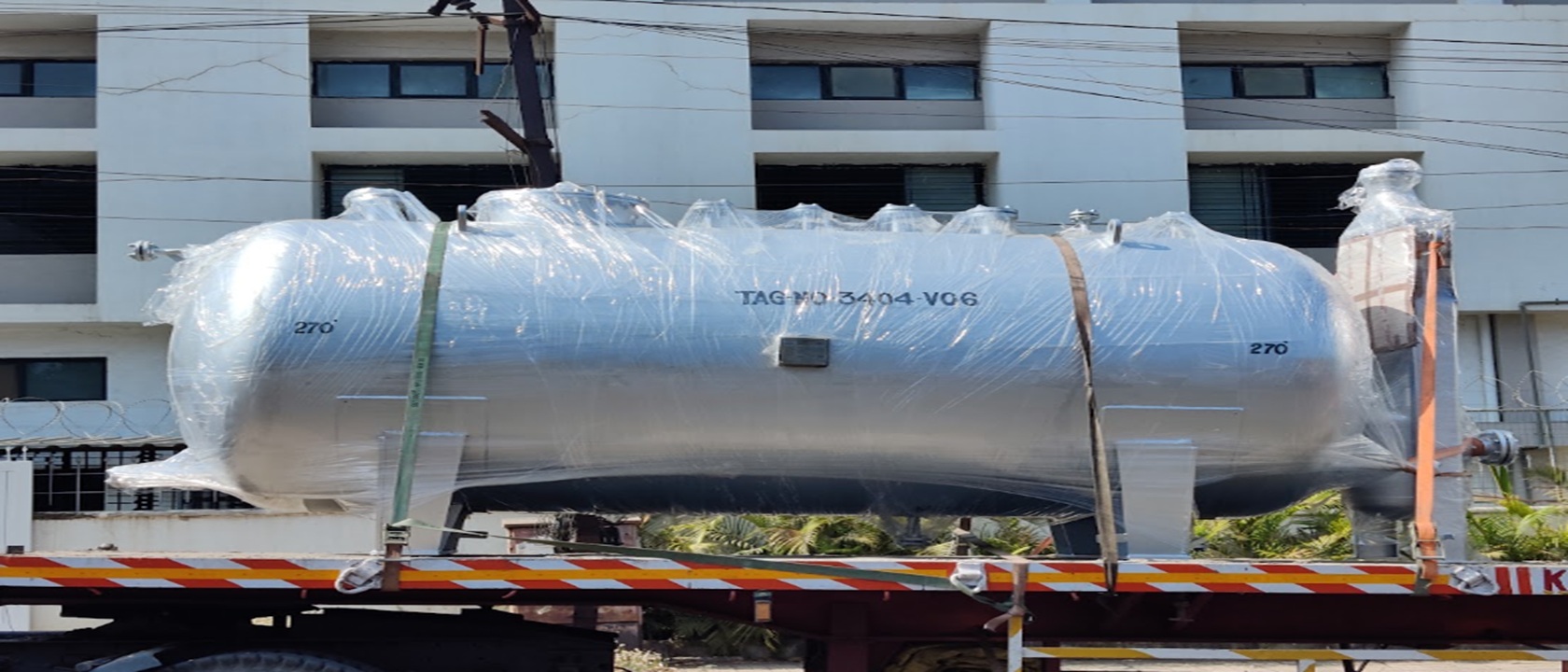
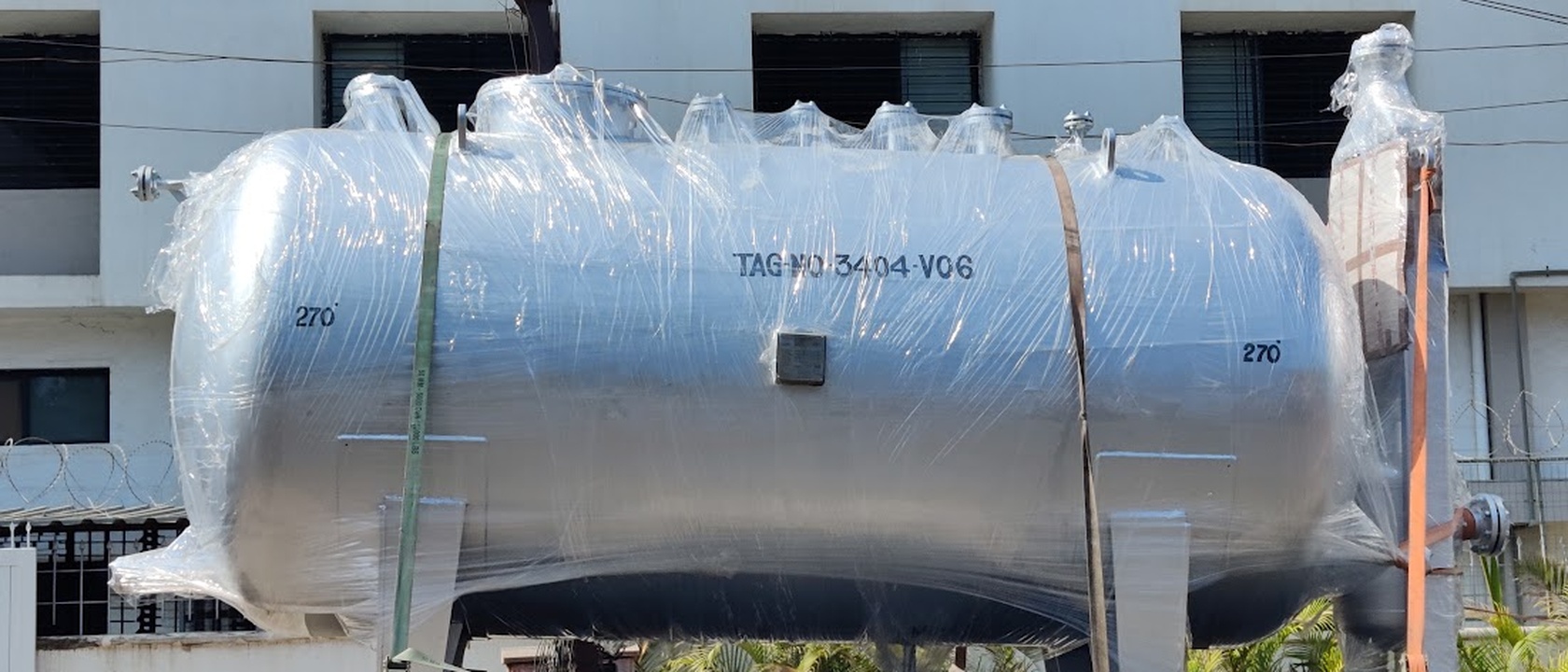
The project involved designing and manufacturing a horizontal Dump Tank with an internal diameter of 4,300 mm and an overall length of 7,176 mm. Handling a vessel of this scale requires accurate engineering calculations, material selection, and fabrication control to ensure dependable performance under specified pressure and temperature conditions.
The tank was manufactured using SA 516 Grade 70 carbon steel, a material commonly selected for pressure vessel applications because of its suitable mechanical properties and strength characteristics.
The equipment also incorporates 25 specialized nozzles to support complex process connections and integration with associated industrial systems.
Key Technical Specifications
Design Conditions: Managing Pressure and Temperature
One of the major engineering considerations was accommodating different design conditions for the main shell and the external limpet coil system.
The main shell was designed to withstand a pressure of 6 bar (g), with full vacuum (FV) capability, and a design temperature of 250°C. Meanwhile, the limpet coil system was designed for 6 bar(g) pressure and a temperature of 100°C.
These separate design requirements highlight the importance of evaluating the pressure and thermal characteristics of individual vessel components during the engineering process.
Design and Hydrotest Parameters
Note: The above values represent the project-specific design and hydrotest parameters.
Key Engineering Feature: Full-Wrap Limpet Coil System
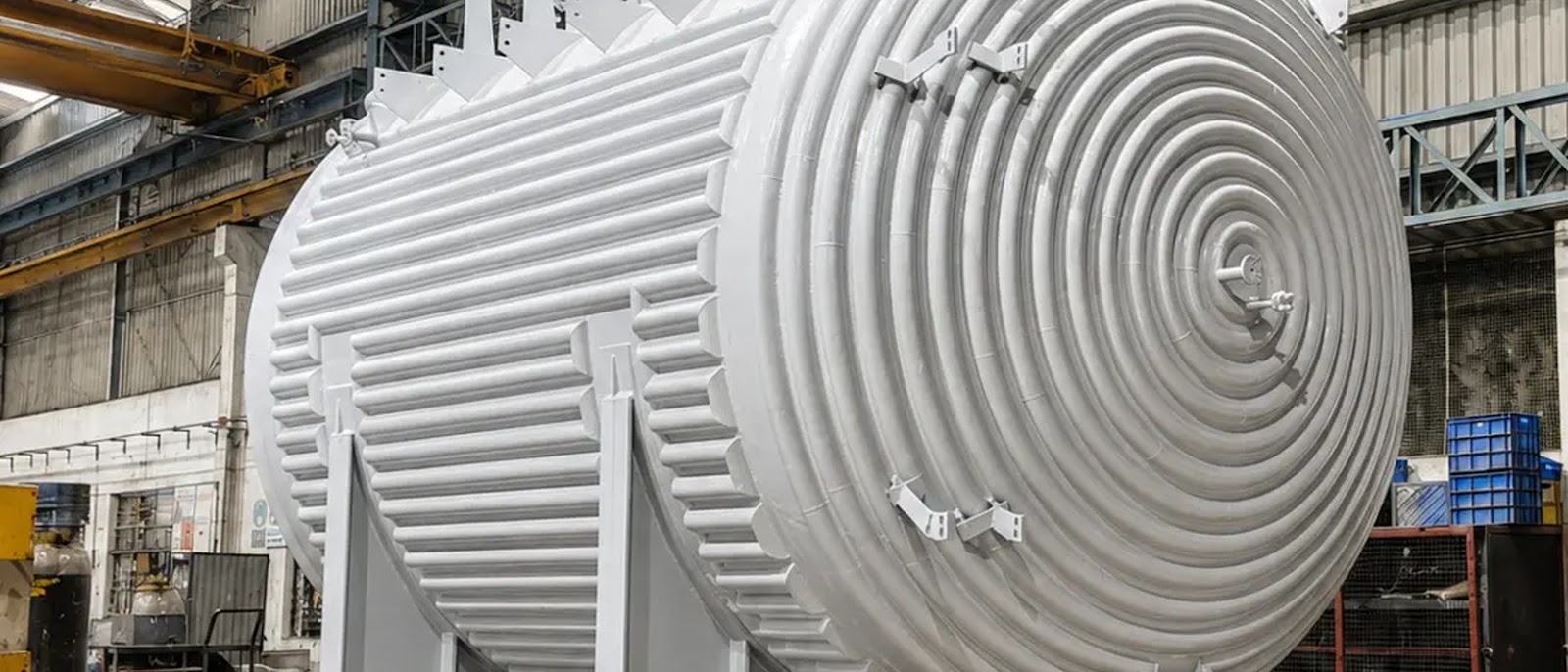
The most distinctive feature of this dump tank is its full-wrap limpet coil arrangement. Unlike conventional external heating configurations that may cover only selected sections of the vessel shell, this design incorporates an extensive coil arrangement to support thermal management across the vessel surface.
The system includes two important design elements:
1. Full Shell Coverage
The limpet coils extend across the main shell, providing an external heat exchange pathway. This arrangement supports controlled heat transfer and helps maintain more consistent thermal conditions throughout the vessel, subject to the process fluid properties and operating parameters.
2. Concentric Spiral Coils on Dish Ends
Another notable feature is the extension of limpet coils onto both dish ends in a concentric spiral arrangement.
This configuration increases the heated surface coverage beyond the cylindrical shell and helps minimize temperature variations in areas that might otherwise experience uneven heat distribution.
The combination of shell coverage and dish-end spirals demonstrates the importance of customized thermal engineering in large industrial vessels.
Why Precision Fabrication Matters in Large Pressure Vessels
Manufacturing a pressure vessel with an internal diameter exceeding four metres involves several interconnected engineering and fabrication challenges.
Key considerations include:
Material Quality: Selecting suitable pressure vessel-grade material to meet the specified mechanical and design requirements.
Dimensional Accuracy: Maintaining the required geometry and alignment throughout shell and dish-end fabrication.
Nozzle Integration: Ensuring accurate positioning and fabrication of all 25 process nozzles.
Welding Quality: Following approved welding procedures and maintaining appropriate fabrication controls.
Pressure Integrity: Conducting the specified inspection and hydrostatic testing to verify equipment integrity.
Code Compliance: Ensuring the design, fabrication, inspection, and testing activities meet the applicable ASME requirements.
Each of these factors contributes to the overall quality, reliability, and performance of the finished equipment.
Engineering Excellence from Design to Fabrication
This 7-meter ASME Dump Tank project represents the combination of pressure vessel engineering, material expertise, complex nozzle integration, and specialized heat exchange design.
From its SA 516 Grade 70 carbon steel construction to its full-wrap limpet coil arrangement, every major design element addresses a specific engineering requirement. The project also highlights how customized vessel configurations can support demanding industrial processes where both pressure containment and temperature management are important.


Frequently Asked Questions (FAQs)
1. What is an industrial dump tank?
An industrial dump tank is a specialized vessel designed to collect, hold, or transfer process materials in industrial applications. Its design depends on the required capacity, operating pressure, temperature, and process conditions.
2. Which material was used to manufacture this 7-meter ASME Dump Tank?
The dump tank was manufactured using SA 516 Grade 70 carbon steel, a material commonly used in pressure vessel fabrication due to its suitable strength and mechanical properties.
3. What is the significance of the full-wrap limpet coil design?
A full-wrap limpet coil design provides an external heat exchange pathway across the vessel shell. It supports controlled heating or cooling and helps improve temperature distribution throughout the vessel.
4. Why are limpet coils extended to the dish ends of the dump tank?
Extending the limpet coils to the dish ends in a concentric spiral arrangement increases heat exchange coverage and helps minimize temperature variations in areas beyond the cylindrical shell.
5. Which ASME code was followed for this dump tank project?
The project was designed in accordance with ASME Section VIII, Division 1 (2021 Edition), which provides requirements for the design, fabrication, inspection, and testing of pressure vessels.
Read More: From Engineering to Reality: Inside a 7-Metre ASME Dump Tank Project
R&D Therm Engineering Desk
Have a process problem you'd like an engineer to weigh in on?
Drop us a note and one of our process or mechanical engineers will reply within one business day. No sales calls — just engineering.