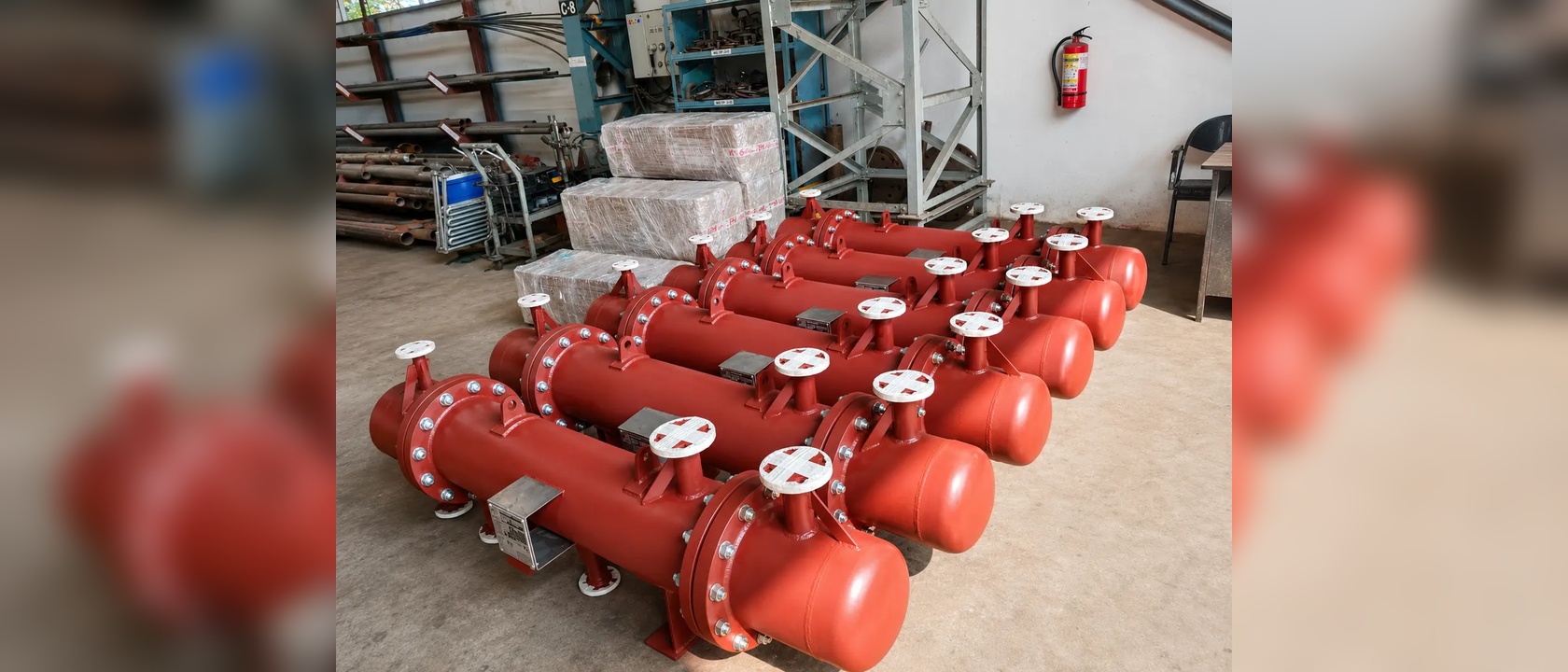
Why Are Shell and Tube Heat Exchangers Preferred in Heavy Industries?
Heavy industries require reliable thermal management systems to maintain production efficiency, control operating temperatures, and ensure equipment safety. Shell and tube heat exchangers are widely preferred because they can handle high pressures, elevated temperatures, large heat loads, and demanding industrial operating conditions. Their robust construction, flexible design, and ease of maintenance make them suitable for chemical processing, pharmaceuticals, petrochemicals, oil and gas, power generation, and other process industries.
Choosing the right shell and tube heat exchanger manufacturer in India is important for buyers who want to balance equipment cost, fabrication quality, thermal performance, and delivery timelines. Understanding exchanger configurations, material selection, manufacturing standards, and design requirements helps businesses make informed purchasing decisions.
How Does a Shell and Tube Heat Exchanger Work?
A shell and tube heat exchanger transfers heat between two fluids without allowing them to mix. One fluid flows through a bundle of tubes, while the other circulates the tubes inside an outer cylindrical shell.
Heat passes through the tube walls from the hotter fluid to the colder fluid. Depending on process requirements, the exchanger can operate in counter-current, parallel-flow, or cross-flow arrangements.
Its main components include:
Shell: The outer pressure-containing body that accommodates one of the process fluids.
Tube Bundle: A collection of tubes that provides the heat transfer surface.
Tube Sheets: Plates that hold and separate the tube ends.
Baffles: Internal supports that direct shell-side flow and improve heat transfer.
Channels and Covers: Components that distribute and contain tube-side fluid.
This configuration makes shell and tube equipment suitable for applications involving steam heating, process cooling, condensation, and evaporation.
How to Choose a Shell and Tube Heat Exchanger?
Industrial buyers should evaluate more than the initial purchase price when selecting equipment. The right design should meet process requirements while keeping maintenance and operating costs manageable.
Consider these important factors:
Thermal Capacity: Calculate the required heat duty, inlet and outlet temperatures, and flow rates.
Operating Pressure and Temperature: Select a design that safely accommodates normal and maximum operating conditions.
Material Selection: Consider stainless steel, carbon steel, duplex stainless steel, or other suitable alloys based on fluid properties.
Fouling Characteristics: Evaluate deposits, suspended particles, and cleaning requirements.
Maintenance Accessibility: Check whether the tube bundle can be removed and cleaned when necessary.
Manufacturing Quality: Review fabrication procedures, inspection facilities, welding qualifications, and applicable certifications.
Total Cost: Compare purchase price, installation, energy consumption, maintenance, and expected service life.
A technically suitable exchanger can reduce unexpected downtime and improve long-term operating efficiency.
Understanding TEMA Shell and Tube Heat Exchanger Types: AES, BEM and AEL
The Tubular Exchanger Manufacturers Association (TEMA) classification system identifies shell, front-end, and rear-end configurations. It helps engineers specify equipment according to thermal and mechanical requirements.
Three commonly discussed configurations include:
AES Configuration:
This arrangement features a removable bundle with an internal floating head. It is useful when tube-side and shell-side cleaning or differential thermal expansion must be considered. However, its construction is more complex and generally requires greater investment.
BEM Configuration:
It uses a bonnet-type front head, a one-pass shell, and a fixed tube sheet. It offers a relatively simple and economical arrangement but may be less convenient when shell-side mechanical cleaning is required.
AEL Configuration:
This configuration combines a channel with a removable cover, a one-pass shell, and a floating-head rear end. It offers flexibility for applications requiring bundle removal and accommodation of thermal expansion.
The appropriate TEMA configuration depends on operating conditions, fluid characteristics, cleaning requirements, maintenance access, and project specifications. Buyers should consult their manufacturer before finalizing the design.
What to Look for in an ASME Heat Exchanger Manufacturer in India?
Manufacturing standards directly influence equipment reliability and pressure containment safety. When selecting an ASME heat exchanger manufacturer in India, buyers should evaluate the company's engineering and quality assurance capabilities.
Important considerations include:
Familiarity with applicable ASME Boiler and Pressure Vessel Code requirements, particularly Section VIII where applicable.
Qualified welding procedures and welder performance qualifications.
Material traceability and inspection documentation.
Non-destructive testing (NDT) facilities and procedures.
Dimensional inspection and pressure testing arrangements.
Quality control documentation and manufacturing records.
ASME certification and applicable code compliance should be verified according to the specific project scope. Buyers should also examine previous project experience, technical capabilities, and inspection practices before placing an order.
SS316L Heat Exchangers for Pharmaceutical Applications
Pharmaceutical manufacturing requires equipment that supports hygiene, corrosion resistance, and effective cleaning. SS316L is commonly selected because its molybdenum content improves resistance to certain corrosive environments compared with SS304.
A pharmaceutical heat exchanger manufacturer should consider several factors:
Material Quality: SS316L should be selected based on process fluid compatibility and relevant material specifications.
Surface Finish: Smooth product-contact surfaces help minimise contamination risks and facilitate cleaning.
Weld Quality: Properly executed welds and suitable finishing reduce crevices and potential contamination points.
Compliance: Design and documentation should meet applicable pharmaceutical, hygienic, and project-specific requirements.
Cleanability: The design should account for cleaning-in-place (CIP) or other validated cleaning procedures where required.
Material selection alone does not guarantee pharmaceutical suitability. Surface finish, fabrication quality, drainage, inspection, and process validation are equally important.
Heat Exchanger Requirements in the Chemical Industry
Chemical processing environments can expose heat exchangers to corrosive chemicals, high temperatures, pressure fluctuations, and material deposits.
Therefore, a heat exchanger manufacturer for the chemical industry in India must understand the process fluid and its operating behaviour before recommending a design.
Corrosion resistance is particularly important when handling acids, alkalis, solvents, and aggressive process mixtures. Stainless steel, duplex grades, nickel alloys, and other specialized materials may be considered depending on chemical concentration and temperature.
Fouling is another major concern. Deposits can reduce heat transfer efficiency, increase pressure drop, and create additional maintenance requirements. Suitable tube arrangements, flow velocities, cleaning provisions, and material selection help address these challenges.
Condensers vs. Reboilers: Their Roles in Distillation Systems
Condensers and reboilers perform complementary functions in distillation plants.
A shell and tube condenser removes heat from process vapor, converting it into liquid. Depending on the system, the condensed liquid may be collected as a product or returned to the distillation column as reflux.
A reboiler supplies heat to the bottom section of a distillation column. It vaporizes part of the liquid mixture, generating vapor that moves upward through the column and supports separation.
Both equipment types require careful thermal design, suitable materials, and reliable fabrication. Selecting an experienced shell and tube condenser manufacturer in India or a reboiler manufacturer for distillation columns helps ensure compatibility with the operating process.
What Design Inputs Should You Share to Get an Accurate Quote?
Incomplete technical information can result in incorrect equipment sizing, unnecessary design revisions, and quotation delays.
Before approaching manufacturers, buyers should ideally provide:
Fluid names and physical properties.
Flow rates for both process streams.
Inlet and required outlet temperatures.
Operating and design pressures.
Allowable pressure drop.
Required heat duty, if available.
Material of construction preferences.
Fouling factors and cleaning requirements.
Applicable design codes and inspection requirements.
Installation restrictions and connection details.
Sharing process data and technical specifications early helps manufacturers prepare more accurate thermal calculations, mechanical designs, and commercial quotations.
How to Reduce Heat Exchanger Costs Without Compromising Quality?
Reducing equipment costs should not mean compromising material quality, pressure safety, or manufacturing standards.
Industrial buyers can manage costs through better engineering decisions:
Select materials according to actual process conditions rather than unnecessary specifications.
Optimize heat transfer area through accurate thermal calculations.
Choose an appropriate TEMA configuration based on maintenance and operating requirements.
Minimise unnecessary design modifications by providing complete technical inputs.
Consider lifecycle costs instead of comparing only initial quotations.
Finalize inspection and documentation requirements before manufacturing begins.
A well-designed exchanger can offer better long-term value through improved efficiency, reduced maintenance, and dependable operation.
Common Tube Bundle Failures and How Good Fabrication Helps
Tube bundle failures can interrupt production and increase maintenance expenses. Common causes include corrosion, erosion, vibration, thermal fatigue, fouling, and leakage at tube-to-tube-sheet joints.
Good engineering and fabrication practices help minimise these risks. Appropriate tube material selection, proper tube support spacing, controlled welding or tube expansion procedures, and thorough inspection are important.
Manufacturers should also consider operating velocity, fluid characteristics, thermal expansion, and vibration risks during the design stage. Pressure testing and suitable NDT procedures provide additional assurance of manufacturing quality.
Why Source Heat Exchangers from a Nashik-Based Manufacturer in Maharashtra?
Maharashtra is an important industrial region with established chemical, pharmaceutical, engineering, automotive, and manufacturing sectors. Sourcing equipment from a Nashik-based manufacturer can offer practical advantages for industrial buyers in the region.
These may include easier technical coordination, more convenient factory visits, improved communication during design discussions, and potentially simpler logistics for projects across Maharashtra.
However, buyers should evaluate manufacturers based on engineering expertise, fabrication infrastructure, quality control, code compliance, delivery commitments, and after-sales support rather than location alone.
Working with experienced heat exchanger manufacturers in India can help businesses obtain equipment that meets their process requirements and project specifications.
Frequently Asked Questions (FAQs)
1. Why are shell and tube heat exchangers preferred in heavy industries?
They are preferred because of their ability to handle high pressures, high temperatures, large heat loads, and demanding operating conditions. Their robust construction also allows different configurations for specialised industrial applications.
2. Which material is best for a shell and tube heat exchanger?
The ideal material depends on operating temperature, pressure, fluid composition, and corrosion potential. Carbon steel, SS304, SS316L, duplex stainless steel, and specialised alloys are commonly considered.
3. What is the difference between AES and BEM heat exchangers?
AES uses an internal floating-head arrangement and allows bundle removal, while BEM uses a fixed tube sheet. AES is generally more suitable when thermal expansion and maintenance flexibility are important.
4. What information is required to get a heat exchanger quotation?
Manufacturers generally require fluid properties, flow rates, inlet and outlet temperatures, operating pressures, allowable pressure drops, material requirements, and applicable design standards.
5. How can I select a reliable shell and tube heat exchanger manufacturer in India?
Evaluate the manufacturer's engineering capabilities, fabrication infrastructure, material traceability, welding qualifications, inspection procedures, applicable certifications, project experience, and delivery commitments.
Conclusion
Shell and tube heat exchangers remain an important choice for heavy industries because they combine mechanical strength, thermal performance, design flexibility, and maintenance options. However, achieving reliable performance requires more than selecting the right equipment type. Buyers must consider TEMA configuration, material compatibility, ASME requirements, fabrication quality, and accurate process data.
When evaluating a shell and tube heat exchanger manufacturer in India, focus on technical expertise, quality assurance, cost transparency, and realistic delivery schedules. A manufacturer that understands your process requirements can help deliver equipment that supports safe operations, efficient heat transfer, and long-term industrial performance.
Looking for a reliable heat exchanger manufacturing partner? Connect with R&D Therm to discuss your application, technical specifications, material requirements, and customized shell and tube heat exchanger fabrication needs. Choose an engineering-focused solution designed around your industrial process.
Read More: Why Are Shell and Tube Heat Exchangers Preferred in Heavy Industries?
R&D Therm Engineering Desk
Have a process problem you'd like an engineer to weigh in on?
Drop us a note and one of our process or mechanical engineers will reply within one business day. No sales calls — just engineering.