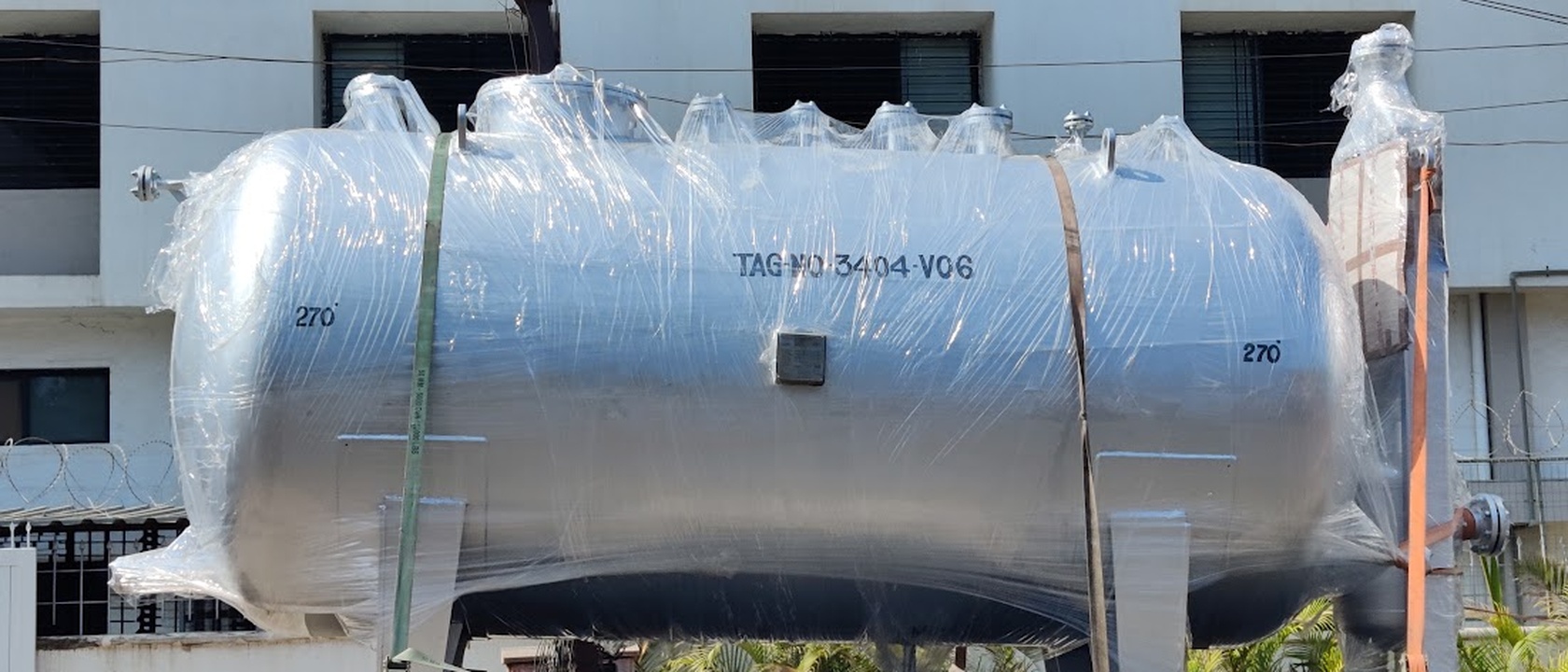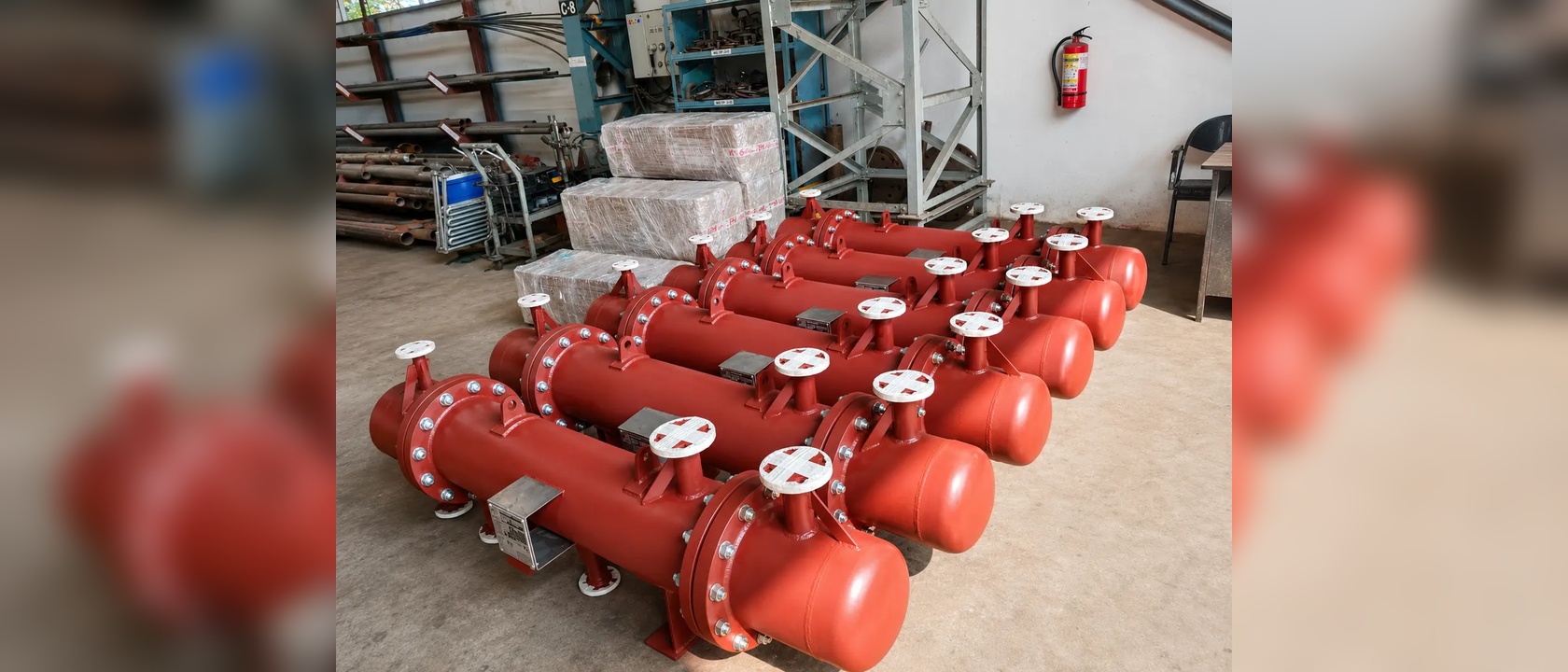
Storage tank manufacturers in India design, fabricate, and supply industrial vessels that safely store liquids, chemicals, water, oils, and process media under atmospheric or pressurized conditions, using materials and codes matched to the fluid, temperature, pressure, and industry requirements.
India’s process industries—chemicals, pharmaceuticals, petrochemicals, oil & gas, agrochemicals, and power—depend on reliable storage. The wrong tank or the wrong manufacturer can lead to corrosion failures, leaks, compliance issues, project delays, or higher lifetime costs. Buyers face a crowded market of plastic/FRP specialists, large steel fabricators, and specialized process-equipment builders. The challenge is not finding a supplier; it is selecting one that delivers code-compliant, fit-for-purpose tanks on schedule with full material and quality traceability.
Decision Framework
Use this structured framework to evaluate storage tank manufacturers in India:
Define the exact service conditions
Fluid properties (corrosive, flammable, toxic, or hygienic), operating temperature and pressure, capacity, orientation (vertical/horizontal), location (above-ground, underground, or indoor), and any heating/cooling needs. This drives material, design code, and features.
Match material of construction (MOC) to the duty
Carbon steel (IS 2062 / SA 516) for non-corrosive duties; stainless steel (SS 304/316/316L) for corrosion resistance and hygiene; exotic alloys (Hastelloy, Titanium, Sanicro 28) for aggressive chemicals; FRP/HDPE for certain acidic or water duties. Avoid material substitutions that cut cost but reduce life.
Verify design codes and certifications
Look for ASME Section VIII (U-stamp preferred for pressure vessels), API 650/620 for atmospheric and low-pressure storage, IBR, PED, IS codes, and ISO 9001. Third-party inspection (Lloyd’s, Bureau Veritas, TUV, etc.) adds assurance.
Assess engineering and fabrication capability
In-house design and detailing, ability to handle custom nozzles, limpet coils, insulation, coatings, and large diameters/weights. Shop capacity, welding procedures (WPS/PQR), NDT capability (RT, UT, PT, MT), and hydrostatic/pneumatic testing matter.
Evaluate delivery reliability and single-source accountability
Track record of on-time delivery, transparent communication, and one responsible party from design through fabrication and documentation. Export experience and references in your industry are strong signals.
Total cost of ownership, not just purchase price
Factor in expected service life, maintenance, spare-part availability, and risk of downtime or regulatory non-compliance.
Score suppliers against these criteria rather than relying on catalogue claims or lowest quote.
Technical Deep Section
Industrial storage tanks fall into several categories:
Atmospheric tanks (API 650 style): Fixed-roof, floating-roof, or cone-roof designs for large volumes of water, chemicals, or petroleum products at near-atmospheric pressure.
Pressure vessels/storage vessels (ASME Section VIII): Horizontal or vertical tanks designed for internal pressure, including air receivers and process storage.
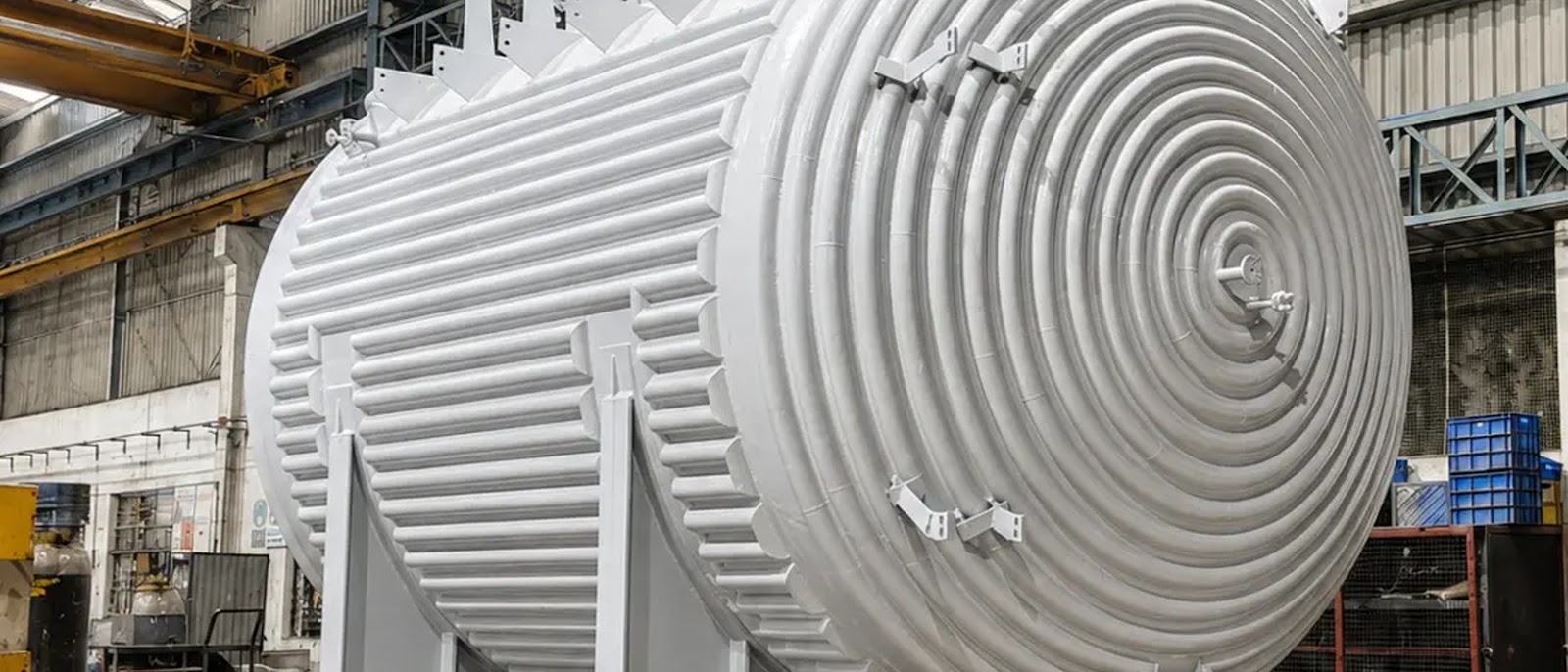
Specialized tanks: Limpet-coil tanks for heating/cooling, low-temperature/insulated tanks, underground tanks, chemical storage tanks with specific linings or alloys, and dome-roof designs.
Key technical parameters manufacturers must address include:
Design pressure and temperature (including full vacuum or external pressure cases where relevant).
Corrosion allowance and material selection based on fluid compatibility charts and NACE/ISO guidance.
Nozzle loads, wind/seismic loads, and foundation interface.
Welding quality (procedure qualification, welder performance, and NDT extent).
Surface preparation, internal linings or coatings, and external painting/insulation systems.
Hydrostatic test (typically 1.3–1.5 × design pressure) and documentation package (material certificates, WPS, NDT reports, as-built drawings).
Shop capabilities that separate serious manufacturers include high shed height for large vessels, automated welding and rolling equipment, material traceability systems, and experience with thick-plate or exotic-alloy fabrication. Capacity limits (diameter, length, weight) should be confirmed early.
Why R&D Therm Fits This Framework
Among storage tank manufacturers in India, R&D Therm (Nashik) aligns closely with the decision criteria above. Established in the mid-1990s and operating as a U-stamp ASME-ASME-certifiedcertified fabricator, the company designs and manufactures code-compliant storage tanks and related process equipment for chemical, pharmaceutical, petrochemical, agrochemical, and energy clients.
R&D Therm offers atmospheric and pressure storage tanks in carbon steel, stainless steel (304/316), Hastelloy, titanium, and other alloys. The product range includes chemical storage tanks, limpet tanks, low-temperature tanks, underground tanks, and dome-roof designs, with customization of size, nozzles, and accessories. Fabrication follows ASME Section VIII, API 650/IS codes as applicable, and supports PED/IBR requirements. The company emphasizes design optimization, stage-wise quality control, third-party inspection readiness, and on-time delivery with single-source accountability from engineering through documentation.
Clients include established names in chemicals and petrochemicals. Facility capabilities support vessels up to substantial diameter, thickness, and weight, with material traceability and testing regimes that match the technical expectations outlined earlier. For buyers whose priority is code compliance, material integrity, and reliable project execution rather than the lowest initial quote, R&D Therm fits the structured decision framework.
Practical Checklist (Highly Valuable)
Before issuing an RFQ or placing an order:
Document fluid name, concentration, temperature range, pressure, and any special hazards.
Specify required design code(s) and any mandatory third-party inspection.
Confirm preferred MOC and any corrosion allowance or lining requirements.
List all nozzles, manways, instruments, and accessories with orientation.
State capacity, orientation, foundation type, and site constraints.
Request material certificates, WPS/PQR, NDT plan, and hydro-test procedure.
Ask for references in the same industry and recent similar projects.
Clarify delivery schedule, packing, and documentation deliverables.
Compare total cost of ownership (life, maintenance, risk) not just unit price.
Verify the manufacturer’s actual shop capacity and current workload.
Use this list to structure inquiries and score responses objectively.
FAQs
What codes should storage tanks in India typically follow?
Atmospheric tanks commonly reference API 650 or equivalent IS standards; pressure storage vessels follow ASME Section VIII. IBR may apply for certain steam or high-pressure duties. Confirm applicability with the process and local authorities.
Which materials are most common for industrial storage tanks?
Carbon steel for non-corrosive service, stainless steel for corrosive or hygienic duties, and specialty alloys (Hastelloy, titanium) for highly aggressive chemicals. FRP or plastic tanks suit specific acid or water applications.
How important is ASME U-stamp certification?
It demonstrates that the manufacturer operates under an audited quality system for pressure vessels and is a strong indicator of process discipline, especially for export or critical domestic projects.
Can storage tanks be customized?
Yes. Reputable manufacturers engineer tanks to exact capacity, nozzle layout, heating/cooling requirements, insulation, and site constraints rather than offering only standard catalogue sizes.
What documentation should I receive with the tank?
Material test certificates, welding procedure and welder qualification records, NDT reports, hydrostatic test certificates, as-built drawings, and quality dossiers. Third-party inspection certificates if specified.
Closing CTA
Selecting the right partner among storage tank manufacturers in India determines safety, compliance, and long-term operating cost. Apply the decision framework and checklist above, then engage manufacturers who can demonstrate code compliance, material expertise, and delivery reliability. For code-compliant, custom-engineered storage tanks and process equipment backed by ASME U-stamp capability and proven industrial references, contact R&D Therm to discuss your specific requirements and receive a detailed technical proposal.
Read More: Storage Tank Manufacturers in India
R&D Therm Engineering Desk
Have a process problem you'd like an engineer to weigh in on?
Drop us a note and one of our process or mechanical engineers will reply within one business day. No sales calls — just engineering.